

What Is Mole? A Guide to Mexico’s Legendary Sauces
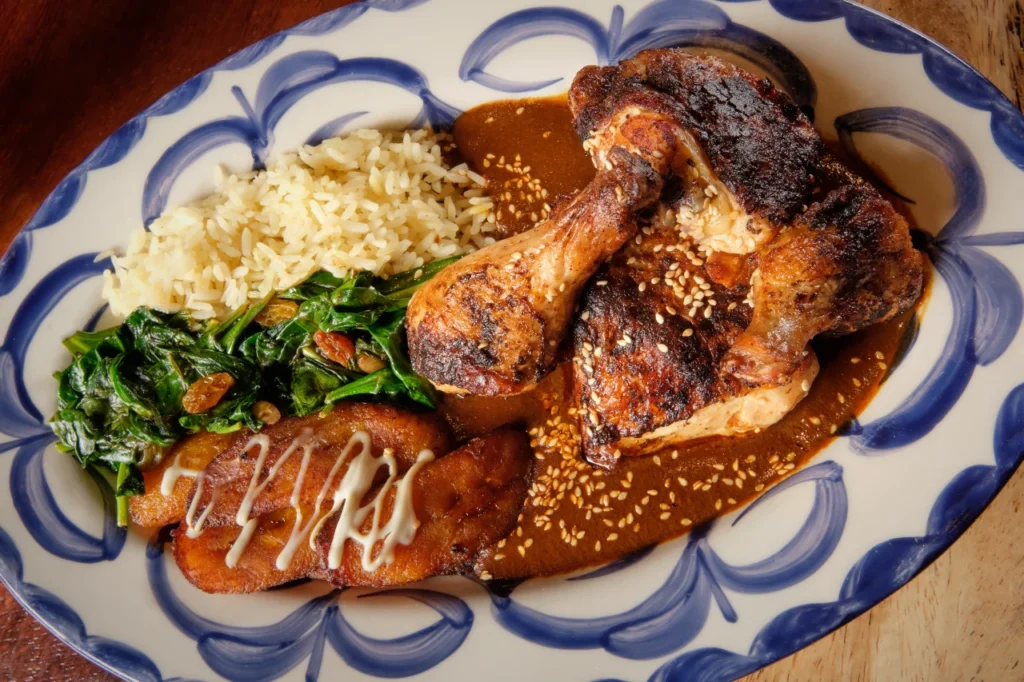
Mole. What is Mole? Few dishes capture the depth of Mexican cooking like mole. Pronounced MOH-lay, it’s a sauce that can take days to make, weave together dozens of ingredients, and taste completely different from one region — or one family — to the next. If you’ve ever wondered what mole actually is and why it’s considered the pinnacle of Mexican cuisine, here’s a clear guide.
What is mole?
Mole is a rich, complex Mexican sauce made from a carefully balanced blend of chiles, spices, nuts or seeds, aromatics, and often a touch of chocolate or fruit. The word comes from the Nahuatl mōlli, meaning “sauce.” Rather than a single recipe, mole is a whole family of sauces, each layering many ingredients into a deep, savory, and subtly sweet flavor.
Where does mole come from?
Mole’s roots run deep in central and southern Mexico, with Oaxaca and Puebla most famous for it. Oaxaca is often called “the land of the seven moles” for its signature varieties, while Puebla is the traditional home of mole poblano. The sauces draw on both Indigenous ingredients — chiles, tomatoes, seeds, and cacao — and elements introduced through centuries of culinary exchange, making mole a true expression of Mexico’s layered food history.
What is the history of mole sauce?
Mole originated in colonial Mexico, blending Indigenous Mesoamerican ingredients with spices brought by Spanish settlers.
The word “mole” comes from the Nahuatl mōlli, meaning “sauce” or “concoction.” Long before the Spanish arrived, Aztec and Maya cooks ground chiles, tomatoes, squash seeds, and wild herbs together in a stone mortar, and these early sauces were often reserved for ceremonies and royal banquets.
New trade routes, including the Manila Galleons, then brought cinnamon, cloves, black pepper, almonds, raisins, and sesame into Mexican kitchens. That blend reached its peak in the colonial convents of Puebla and Oaxaca. According to popular legend, nuns at the Convent of Santa Rosa in Puebla improvised the first mole poblano to feed a visiting archbishop, grinding dried chiles, spices, day-old bread, nuts, and a little chocolate into a dark, rich sauce. The story is probably apocryphal, but it captures how mole became the ultimate expression of mestizaje, the blending of Spanish and Indigenous cultures. To learn more about the tradition we carry on, read the story of Rosa Mexicano.
What are the essential ingredients in mole?
Authentic mole relies on dried chiles, aromatic spices, sweet elements like chocolate or fruit, and thickeners like seeds, nuts, or toasted bread.
Regional recipes vary widely, but almost all share the same five building blocks:
- The chile base: Dried chiles give mole its backbone, color, and heat. Ancho (sweet and fruity), pasilla (earthy and dark), and mulato (smoky and chocolatey) are the classic trio, often joined by guajillo, chipotle, or costeño.
- Thickeners and binders: Toasted almonds, pumpkin seeds, peanuts, and sesame seeds are ground into the paste, while toasted bread or fresh corn masa helps bind it into a velvety, spoon-coating sauce.
- Sweet and fruit elements: Raisins, plantains, tomatoes, and tomatillos balance the chiles’ bitterness. In many dark moles, Mexican table chocolate goes in near the end for subtle bittersweet depth.
- Aromatics and warm spices: Cloves, canela (Mexican cinnamon), coriander, cumin, anise, and black pepper are toasted to release their oils, alongside roasted garlic and onion.
- The liquid: Chicken, turkey, or pork broth is simmered with the paste for hours so the flavors meld.
What are the main types of mole?
There are many regional moles, but a few are especially well known:
- Mole poblano: Perhaps the most famous, a deep reddish-brown sauce with dried chiles, spices, and a hint of chocolate.
- Mole negro: The dark, intensely complex Oaxacan mole, known for its almost black color and roasted depth.
- Mole verde: A brighter, herbaceous green mole built on tomatillos, fresh herbs, and pumpkin seeds.
- Mole coloradito: A brick-red Oaxacan mole balancing chiles, nuts, and warm spices.
At a glance: five of the best-known moles, side by side.
| Mole | Primary chiles | Flavor profile | Traditional pairing |
|---|---|---|---|
| Mole poblano | Ancho, pasilla, mulato | Rich, earthy, mildly spicy, subtle chocolate sweetness | Chicken, turkey, or pork tamales |
| Mole negro | Chilhuacle negro, mulato, pasilla | Deep, smoky, savory-sweet, with charred notes | Slow-braised chicken or turkey |
| Mole verde | Poblano, jalapeño, serrano | Fresh, herbaceous, bright, tangy, nutty | Pork loin, chicken, or roasted vegetables |
| Mole amarillo | Chilhuacle amarillo, costeño | Vibrant, mildly spicy, aromatic with hierba santa | Beef stew, chicken, or wild mushrooms |
| Mole coloradito | Ancho, guajillo | Mellow, sweet-savory, brick-red | Enmoladas or pork ribs |
Oaxaca’s mole negro gets its near-black color from deliberately charred chile seeds and veins, plus the rare chilhuacle negro chile and avocado leaves. Mole verde skips the long dried-chile simmer and relies on fresh green chiles, pumpkin seeds, tomatillos, and herbs like epazote, cilantro, and hierba santa. Mole amarillo is thickened with fresh corn masa rather than nuts or bread, and mole coloradito is sweetened with plantain and tomato.
Does mole taste like chocolate?
Not exactly. While some moles — like mole poblano and mole negro — include a small amount of Mexican chocolate or cacao, it isn’t a dessert sauce. The chocolate adds richness, bitterness, and body rather than sweetness, rounding out the chiles and spices. A well-made mole tastes savory and layered, with warmth and just a whisper of sweetness underneath.
Why does mole take so long to make?
A traditional mole can call for 20 to 30 ingredients, each toasted, ground, and cooked in stages before blending and simmering for hours. Every element — the dried chiles, the seeds, the spices, the aromatics — is prepared separately so its flavor develops fully. That patient, layered process gives mole its signature complexity, and it’s why so many families guard their recipes across generations.
How is traditional mole prepared?
Traditional mole is a multi-step ritual in which each ingredient is toasted, fried, or roasted separately, ground together, and then simmered for hours.
First, the dried chiles are stemmed, seeded, and lightly toasted on a dry comal or fried in lard to wake up their oils, taking care not to burn them, then rehydrated in hot water or stock. Nuts, seeds, and spices are toasted until fragrant, aromatics are roasted until sweet, and fruit like plantain or raisins is fried until golden.
Once every component has been treated, everything is ground into a thick paste, historically by hand on a volcanic stone metate and today often with a blender or spice mill. The paste is fried in a heavy clay cazuela, stirred constantly, and thinned gradually with hot stock. As it simmers, the oils separate and rise to the surface, a sign the flavors have come together.
How do you serve and enjoy mole?
Mole is traditionally spooned over roasted chicken, turkey, or pork and served with warm tortillas and rice, often finished with toasted sesame seeds.
Because mole is so rich, it works best with simple accompaniments. Use fresh corn tortillas to scoop up every drop of sauce, and pair it with something that adds acidity or a little sweetness, such as a crisp Mexican lager, a glass of mezcal, or a bright cocktail.
Experience house-made mole at Rosa Mexicano
At Rosa Mexicano, we honor this tradition with house-made moles and fresh masa rooted in Mexico’s regional cooking — the same commitment to craft that has defined us since we opened in New York City in 1984. Pair a mole dish with our signature tableside guacamole en molcajete and an original frozen pomegranate margarita for the full experience. Reserve a table to taste it for yourself.
Frequently asked questions
Is mole spicy?
Most moles are more flavorful than fiery. They use dried chiles for depth and warmth rather than sharp heat, so the result is rich and complex, with spice levels that vary by recipe and region.
How is mole served?
Mole is typically spooned over proteins like chicken, turkey, or enchiladas, and served with rice and warm tortillas. It’s a sauce meant to coat and complement the dish rather than sit on the side.
What’s the difference between mole and salsa?
Salsa is usually a fresher, simpler mixture of a few ingredients, while mole is a cooked, deeply layered sauce built from many components and simmered to develop its flavor. Mole is richer, thicker, and far more complex than a typical salsa.
Does all mole contain chocolate?
No. Famous varieties like mole poblano and mole negro use a small amount of Mexican chocolate, but many other moles, such as mole verde, mole amarillo, and pipián, contain none at all.
What’s the difference between mole poblano and mole negro?
Mole poblano comes from Puebla and is reddish-brown, with a sweet-savory balance of warm spices and chocolate. Mole negro comes from Oaxaca and is darker, smokier, and more savory, thanks to charred chile seeds and the rare chilhuacle negro chile.
How long does it take to make mole from scratch?
An authentic, traditional mole typically takes four to eight hours of active preparation and simmering, which is why it is usually made in large batches for celebrations.