
What Is Cinco de Mayo? The Battle of Puebla, Explained
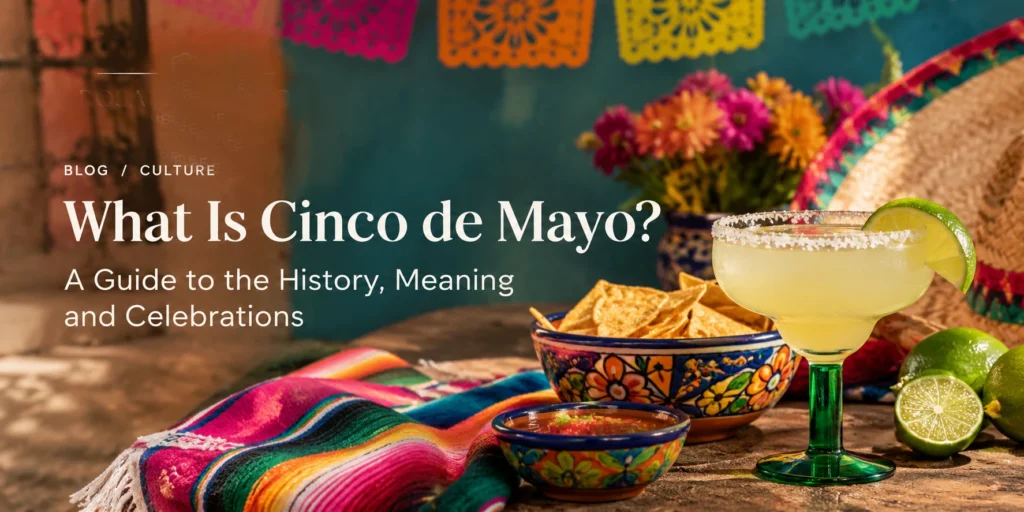
The Battle of Puebla and the Holiday It Became
What is Cinco de Mayo? It marks one day: 5 May 1862, when a heavily outnumbered Mexican army defeated French forces at the Battle of Puebla. It is not Mexican Independence Day; it is not a national holiday across Mexico, and almost everything else people assume about it follows from that first confusion. Here is the actual story, from a kitchen that cooks the food of the city where it happened.
Cinco de Mayo Is Not Mexican Independence Day
This correction comes first, because it shapes everything else. Mexican Independence Day is September 16th, and it commemorates the 1810 call to revolt against Spain. Cinco de Mayo sits half a century later and involves an entirely different opponent.
The two get conflated constantly in the United States, to the point that Cinco de Mayo is often celebrated with symbols that belong to September instead. Knowing the difference is the trick.
What Actually Happened on 5 May 1862
Mexico had suspended payment on foreign debt. France, under Napoleon III, used it as grounds for invasion, with ambitions to install a client empire on the continent. French troops advanced inland toward Mexico City and met resistance at Puebla.
The Mexican force under General Ignacio Zaragoza was smaller, less equipped, and widely expected to lose. It won. The victory did not end the war — French forces regrouped and took Mexico City the following year — but as a symbol it was immediate, and it endured. An outmatched army had held.
Why Do We Celebrate Cinco de Mayo in the United States?
Because Mexican-American communities in California and the Southwest began marking it in the 1860s, while the American Civil War was still being fought. A Mexican victory against a European monarchy carried obvious resonance for people watching that conflict, and the observance took root and stayed.
It grew from there through the twentieth century into something broader and more commercial. That commercialization is why the day is now more visible north of the border than south of it — an American holiday with Mexican origins, rather than a Mexican holiday that traveled.
How Is Cinco de Mayo Observed in Mexico?
Mostly locally. In Puebla, where the battle was fought, the day is genuinely significant and marked with parades and civic ceremony. Elsewhere in Mexico, it passes with far less attention than 16 September. It is a regional commemoration rather than a national celebration, which surprises most people who first encounter it in the United States.
What Food Belongs to Cinco de Mayo?
If you want to eat the day accurately rather than generically, the answer points to Puebla — and Puebla’s defining dish is mole poblano, the long-cooked chile-and-chocolate sauce that takes its name from the city. It is a far better representative of the occasion than anything invented for a promotional calendar.
The drinks question is looser. Tequila and mezcal are Mexican spirits with their own regions and rules, neither of which has anything to do with Puebla, but both of which are worth understanding on their own terms — the difference between them is covered in our guide to tequila and mezcal, and the deeper shelf is in our Agave Spirits Library.
Common Misconceptions, Briefly
It is Mexico’s independence day. No — that is 16 September.
It is Mexico’s biggest holiday. No — outside Puebla it is a minor observance.
The battle won the war. No — France took Mexico City in 1863. Puebla’s significance is symbolic, and that is enough.
It is an ancient tradition. The commemoration is real and dates to the 1860s, but most of what is now attached to it in the United States is considerably more recent.
Marking the Day
Understanding what the day commemorates does not make celebrating it a problem — it makes it better. A meal that reaches for Puebla rather than a generic idea of Mexico is the more interesting version of the occasion, and the more accurate one.
Our menus run year-round across every Rosa Mexicano location, on 5 May and the other 364 days.